
Stop settling for “close enough” when your projects deserve perfect accuracy. These 30 must-have Woodpecker tools for woodworking in 2026 will transform your craft. Whether you need precision measuring gear or durable workshop tools, these red products deliver stunning results that last. Stop fighting with poor gear and start building with total confidence.
Contents
30 Must-Have Woodpecker Tools for Woodworking
1. Woodpeckers StabilMaxRT+ Router Table System

For woodworkers who desire a true router-table arrangement without sacrificing handheld maneuverability, Woodpeckers created the StabilMaxRT+. With this benchtop setup, you can quickly switch between table routing and extended-base handheld work by simply snapping your router base in and out. Amazon offers it as a fully equipped benchtop router table—attach your trim or mid-sized router and start cutting. For small shops, that adaptability is gold: one setup handles edge profiling, dadoes, and template work while keeping accuracy high and setup time low. Your bit height will remain constant cut after cut if the top is stiff.
2. POWERTEC 72153 110″ Track Saw Guide Rail Joining Set

If you break down plywood often, the POWERTEC 72153 turns your track saw into a longer, straighter cutting system. This kit comprises two 55-inch extruded aluminum guide rails and precision connectors that unite them into a continuous 110-inch track. It is compatible with Milwaukee track saws and is made to align the saw for long straight cuts. For cabinet pieces, shelves, and repetitive long cuts, the outcome is cleaner rips, more precise plunge cuts, and less straining on sheet goods. Once the rails are locked, trust the line. This precision minimizes tearout on completed edges and saves you time during fit-up.
3. BORA NGX 5pc Deluxe Clamp Edge Set

You can think of the BORA NGX 5-piece Deluxe Clamp Edge Set as a “precision upgrade” for your current circular saw. According to the company documentation, it contains a 50-inch clamp edge, a 50-inch extension for up to 100 inches of cutting capacity, an NGX saw plate, a T-square attachment, and track clamps. It can guide saws, routers, or jigsaws for straight, clean cuts and is quick to deploy due to its tool-free setup. It’s a clever approach for both pros and do-it-yourselfers to achieve track-saw-style accuracy without investing in an entirely new tool system.
4. Makita 199826-6 Quick Release Clamp Set for Guide Rail

The 199826-6 Quick Release Clamp Set from Makita is a straightforward add-on that solves a common track-saw issue: movement. These clamps are meant to hold your material to the guide rail for a safer, more stable working site, and they’re readily adjustable for different stock sizes. Amazon mentions that it is compatible with Makita guide rails and plunge saws such as the SP6000 series. Your cut line remains true when the rail cannot move, which results in cleaner edges, fewer re-cuts, and greater confidence when tearing lengthy boards or trimming panels. Quick clamp-and-release maintains productivity.
5. Einhell Aluminium Guide Rail

The Einhell aluminum guide rail set (2 × 1000 mm) is ideal for those chasing straighter cuts from a portable saw. Amazon offers it as compatible with Einhell plunge saws and Expert portable circular saws, and highlights grippy strips on the underside for a non-slip hold. In order to achieve cleaner results, a good guide rail covers the cut edge and keeps your tool traveling smoothly. Whether you’re measuring plywood, making long rips, or handling angled cuts, this rail system gives accuracy and a substantial safety boost. Every project benefits from this easy upgrade.
6. DEEFIINE Router Table Setup Blocks
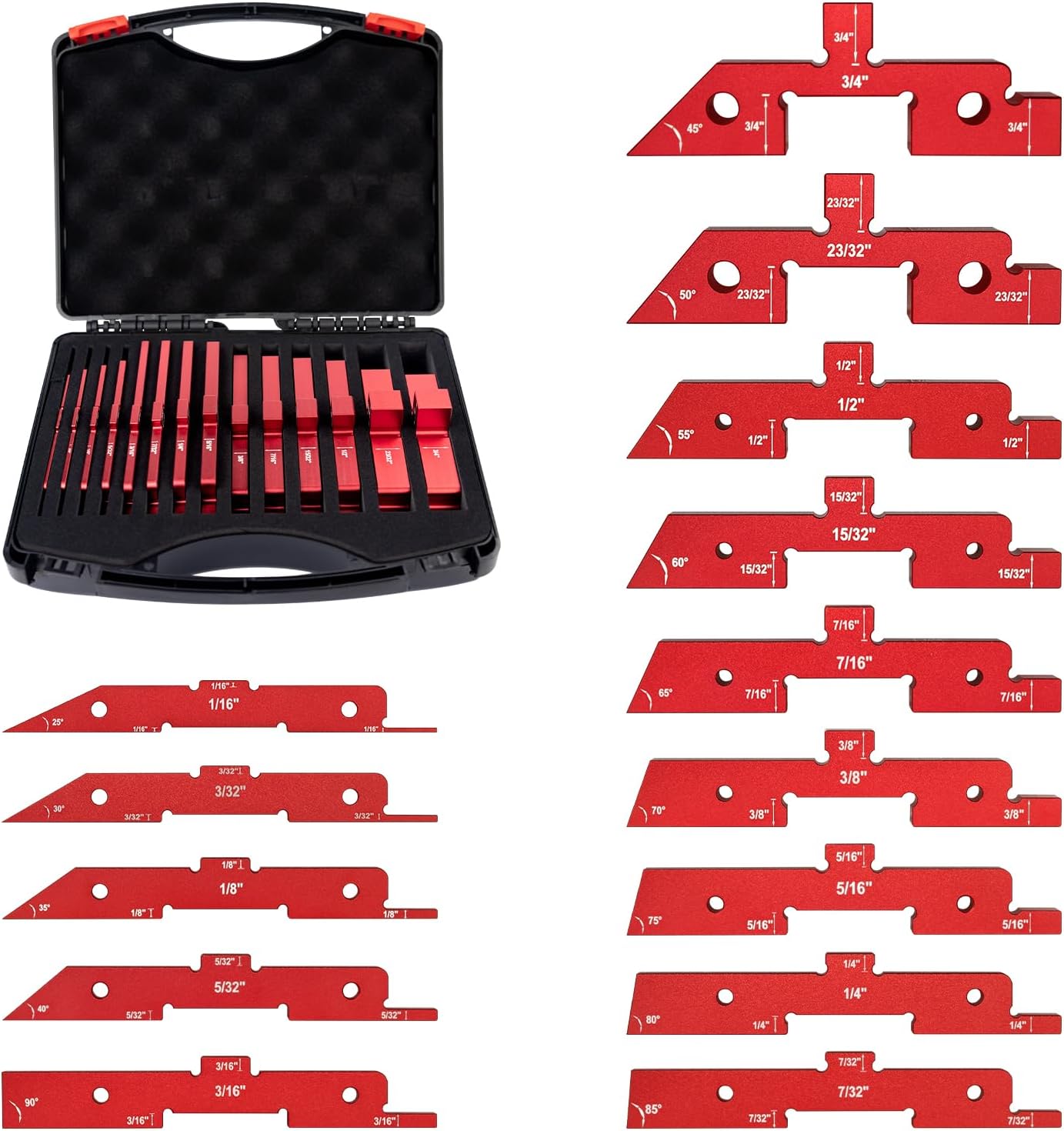
DEEFIINE’s 14-piece Router Table Setup Blocks set is all about repeatable precision. The set comprises different sizes—from 1/16″ up through 3/4″—with claimed precision within 0.002 inch, and laser-engraved markings on three sides for simple reading. These blocks may work as height gauges, depth gauges, stacking blocks, and even angle assists, plus they come with a storage container to keep everything organized. In reality, they save time each time you adjust a fence, planer, router bit, or saw blade—ensuring that your joinery and profiles look the same throughout the job.
7. Eapele Router Table Set Up Bars
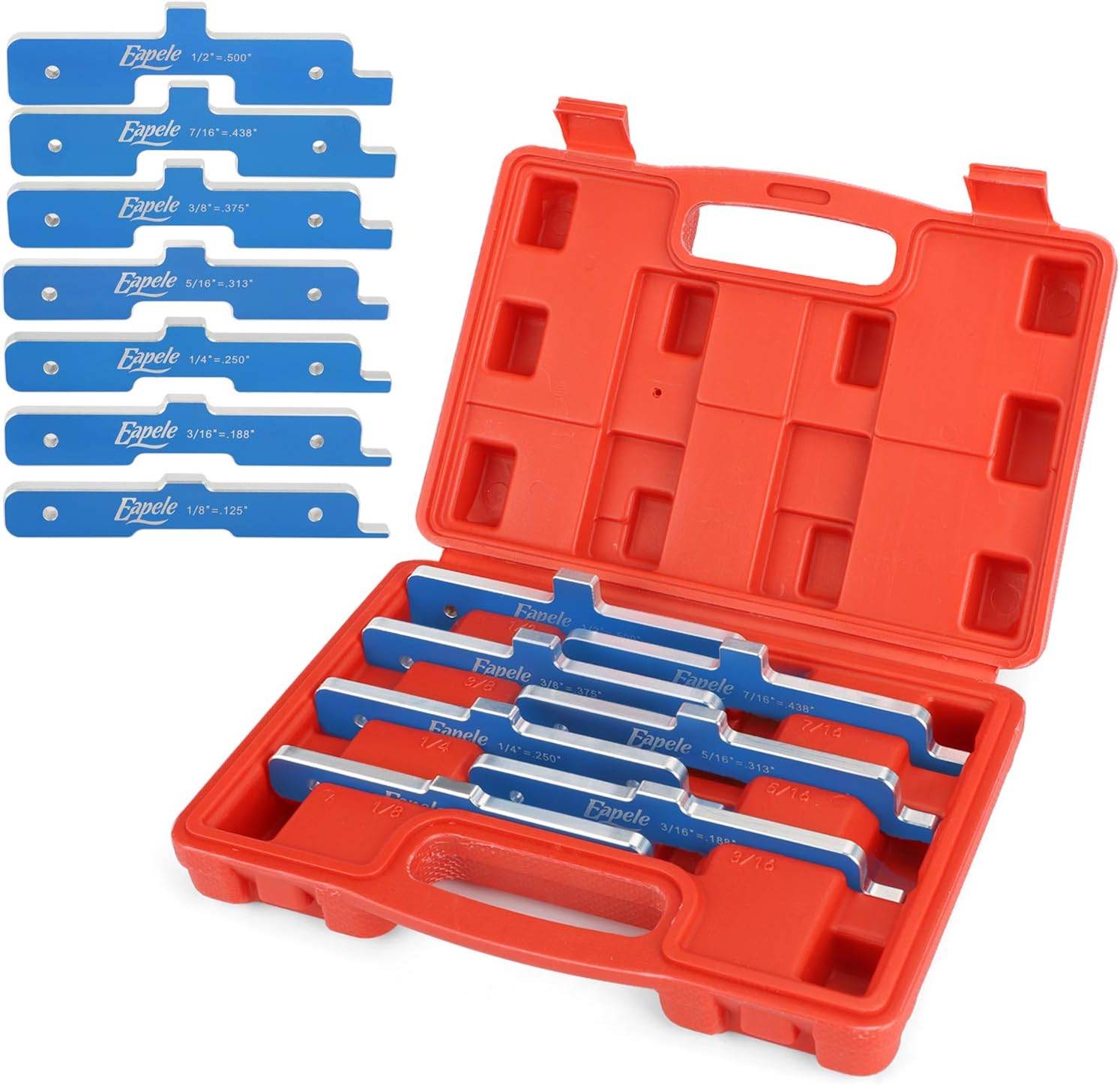
An affordable solution for achieving “set it once” accuracy at the router table is the Eapele Router Table Set Up Bars. This set has a three-gauge stepped design for typical installations and consists of seven bars: 1/8″, 3/16″, 1/4″, 5/16″, 3/8″, 7/16″, and 1/2″. The top edge serves as a depth-check gauge, and the soft aluminum construction helps shield bits or blades from being bumped during setup. You may decrease guesswork on each adjustment and speed up consistent cuts by using them flat, vertical, or stacked.
8. Router Table Lifting System
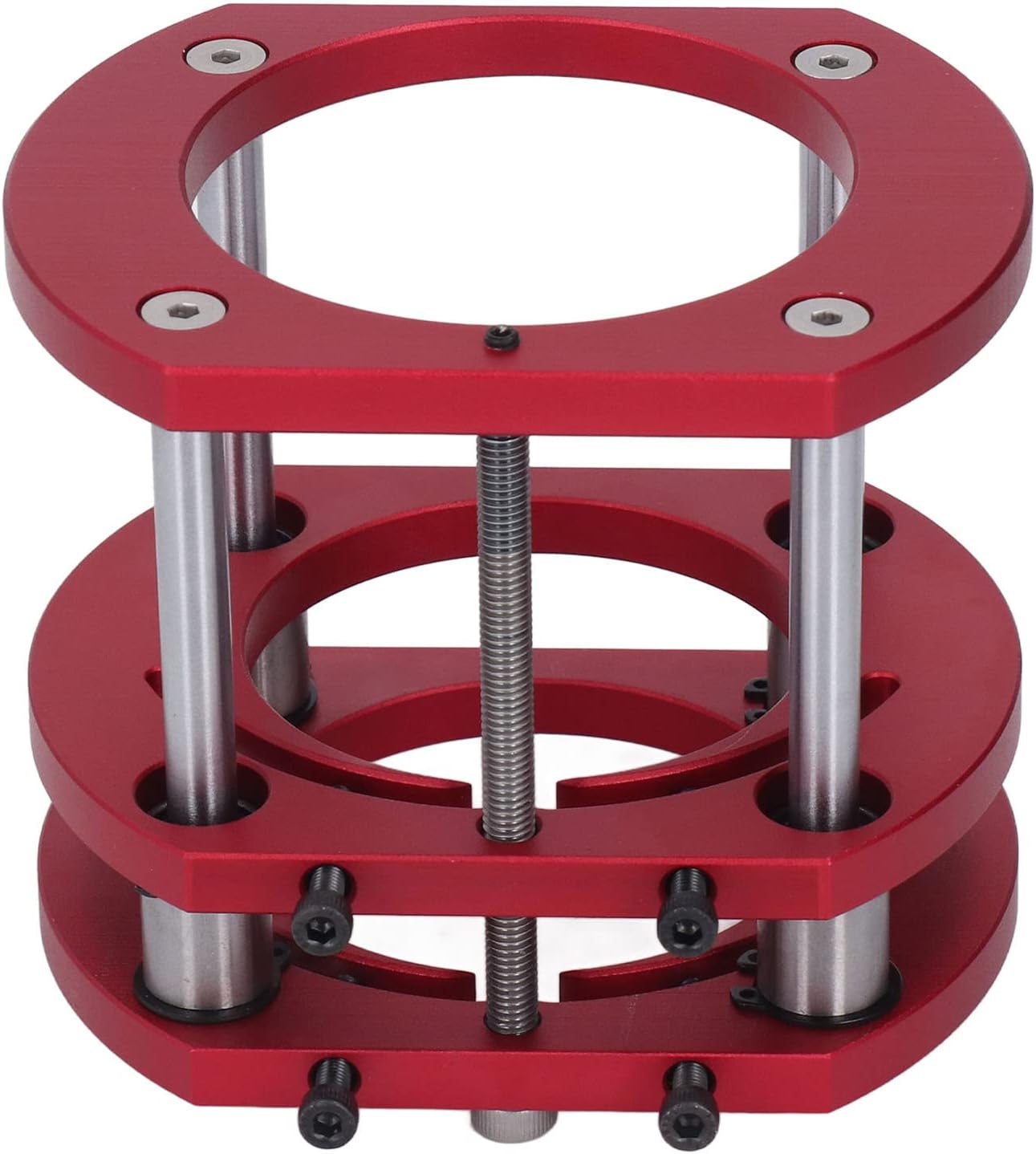
One of those modifications that you don’t really appreciate until you’ve had to deal with underhanded changes is a router lift. This router table lifting system is designed for motors approximately 64–66 mm in diameter and uses an aluminum-alloy body with a stainless-steel support rod for strength and corrosion resistance. Fine control is the key: smoothly raise or lower the bit, lock in the height, and make little adjustments without disrupting your setup. If you do edge profiles, dados, or repeated joinery cuts, a lift like this can dramatically improve consistency and workflow—especially on compact DIY router tables.
9. 4 Jaw Router Table Insert Plate Lift

The 4-Jaw Router Table Insert Plate Lift is designed to clamp a 64–66 mm router motor securely with a four-claw grip, then let you dial bit height with a crank handle. An aluminum-alloy platform with a lifting range of up to 51 mm and a stainless-steel support rod is described by Amazon. Because rigidity equals accuracy—less flex results in cleaner cuts and less chatter marks—that combination is important. For do-it-yourself router-table builds, it’s a sensible option that offers lift-style convenience and more controlled adjustments for intricate edge work, engraving, and trimming without requiring you to constantly reach under the table.
10. Aluminium Router Table Insert Plate with Rings

This aluminum router table insert plate is a simple method to invert a router for routing, carving, and milling activities if you’re making your own router table. Clear, wear-resistant scale marks, an aluminum-alloy construction for longevity, and supplied insert rings for various bit openings are all noted by Amazon. It converts a portable router into a more controlled station tool by mounting to the base for typical shop tasks including sanding, cutting, and shaping. The primary benefit is stability: with the router set in place, your hands control the workpiece—not the tool—so you get smoother edges, cleaner dados, and safer, reproducible results.
11. Adjustable Transparent Acrylic Router Flip Board / Insert Plate

For small-tool routing when visibility is important, this transparent acrylic router flip board is adjustable. According to Amazon, it may be used with a 4-inch cutting machine and can cut at 90° flat and 45° bevel angles. That translucent top allows you see the bit, the line, and the workpiece as you feed—handy for detail trimming, edge shaping, or guided cuts. It’s an inexpensive approach for do-it-yourself shops to add control and accuracy to compact routing operations, particularly when you want to check alignment in real time. Better visibility equals fewer mistakes and cleaner edges. It also enhances control and safety.
12. EMUKOEP Triton DIY Router Table Insert Plate

Manufacturers looking for a reasonably priced, useful router-table core are the target market for the EMUKOEP Triton DIY Router Table Insert Plate. An aluminum-alloy plate with a plastic router insert is mentioned on Amazon, along with a set of mounting screws and plastic insert rings. That’s the foundation you need to build a flatter, more consistent work surface, alter ring sizes for improved chip control, and attach a router firmly. Why it’s helpful: a solid insert plate increases stability and enables you to utilize your router as a miniature shaper, which is ideal for joinery cuts, edge work, and repeatable profiles without having to chase the tool around the board.
13. TOPINCN DIY Router Table

TOPINCN’s DIY Router Table is constructed around the essentials: sturdy materials, firm clamping, and easy adjustability. On Amazon, it’s advertised as employing aluminum alloy and stainless steel for strength and having a wide lifting range, so you can set bit height more comfortably. When alternating between deeper profile cuts, chamfers, and flush-trim passes, that flexibility is essential. A universal router-table platform like this provides woodworkers assembling a tiny workstation with safer routing, cleaner results, and more stable control—especially when compared to freehand work on small parts. Excellent for repeatable settings and batch work without the need for frequent re-measuring.
14. Kreg Rebel 20V Ionic Drive Pocket-Hole Joiner
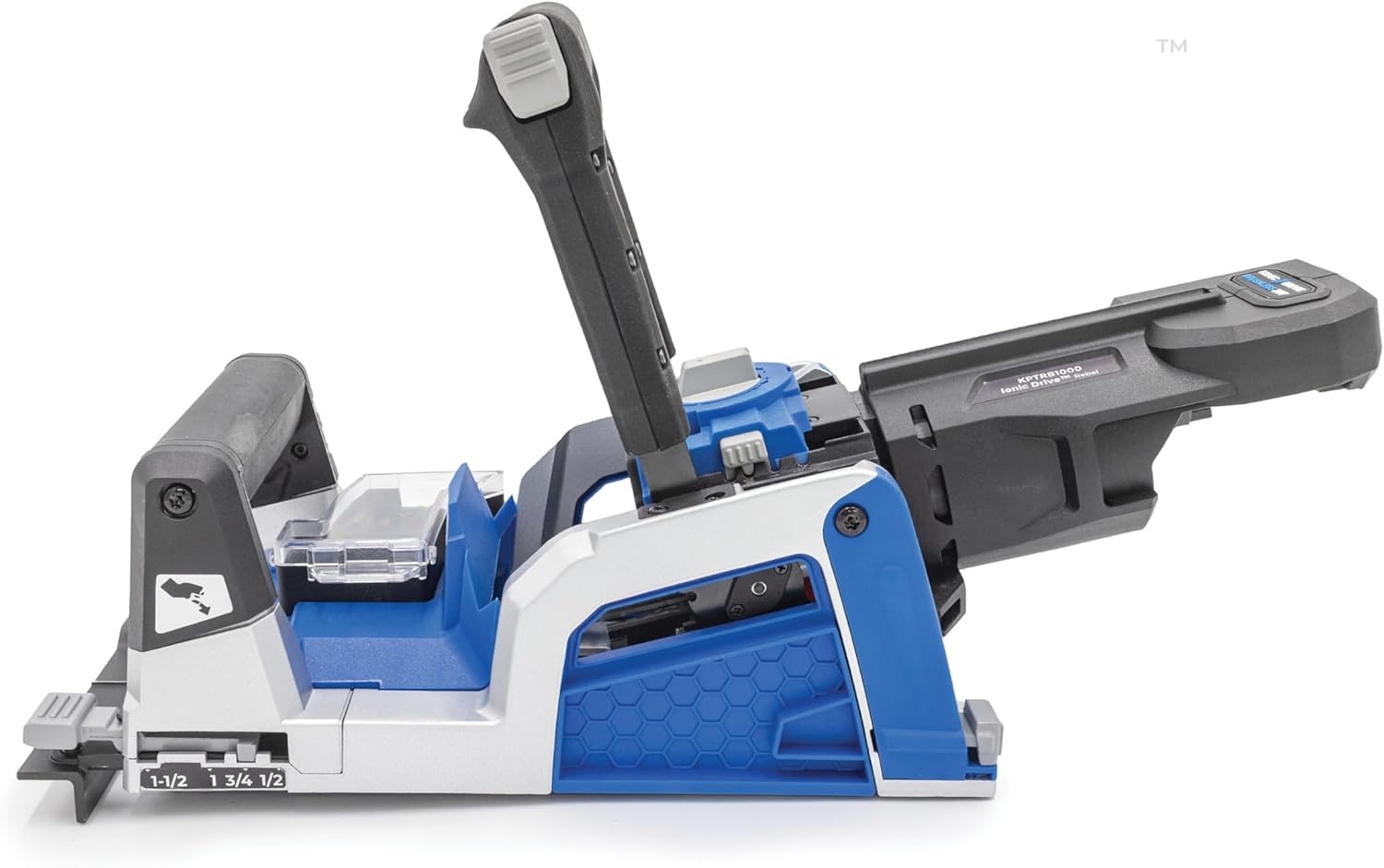
The Kreg Rebel 20V Ionic Drive Pocket-Hole Joiner is built for speed—because traditional pocket-hole drilling can feel like a three-step dance. It’s a cordless, all-in-one joinery tool, and Amazon cites a 20-volt platform with a lithium-ion battery required (battery not included for the bare tool). This type of handheld joiner maintains accurate hole placement while saving a significant amount of time for furniture frames, cabinet face frames, or quick shop fixtures. It’s a contemporary, worksite-friendly alternative to pocket-hole joinery, particularly for builders who wish to achieve repeatability without constantly carrying a bench jig.
15. POWERTEC Single Pocket Hole Jig Kit

If you want clean pocket holes without a pricey machine, the POWERTEC Single Pocket Hole Jig Kit provides a great middle ground. A magnetic quick-change base system that allows you to quickly adjust settings for typical stock sizes is highlighted by Amazon. It is made for lumber that is 1/2″ to 1-1/2″ thick. It’s simpler to maintain the jig square and your holes constant since the base locks in quickly, especially on face-frame rails or repeated cabinet elements. It’s a handy grab-and-go joinery tool for DIY projects, shop furniture, and repairs when time matters but precision can’t slide. Great for compact spaces too.
16. Liyeehao Pocket Hole Jig Kit

Pocket-hole joinery is fast—until your holes wander and your frames start bending. The Liyeehao pocket hole jig kit is developed to keep drilling aligned and repeatable, using an aluminum-alloy body designed for steady guidance during angled pocket-hole drilling. It is designed for basic woodworking operations, such as cabinet frames, leg-and-rail connections, and rapid shop fixtures, where precise hole placement is more important than ornate details. The main benefit is control: your screws pull components together with minimal bother and gaps when you clamp it down and drill the pocket holes. For DIY builders, it’s a practical, workshop-friendly shortcut to stronger assemblies.
17. Adjustable Drill Puncher Locator
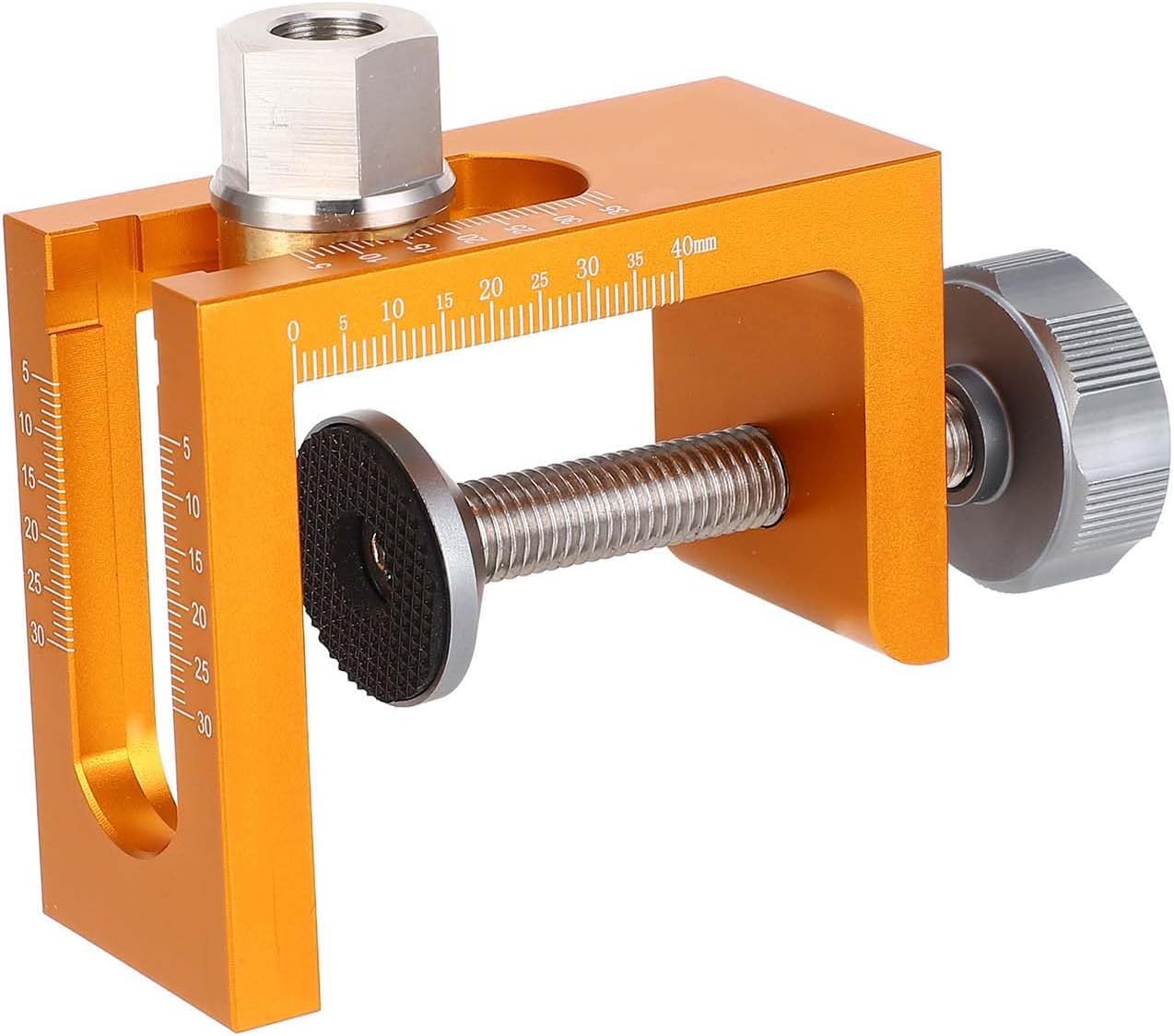
You are already aware of how harsh alignment can be if you have ever attempted pocket holes on a cabinet side and ended up slightly off-center. With a CNC-machined aluminum alloy body and a hardened steel center block structure intended to maintain the drill path’s stability, this adjustable drill puncher locator is made for accuracy. When constructing face frames, carcasses, or repeated shelves, the flexibility facilitates quick positioning for repetition holes—exactly what you need. It’s the kind of jig that changes “measure twice, still miss” into “set once, drill confidently,” enhancing both speed and finish quality on real projects.
18. WEITARI 3-in-1 Doweling Jig Drill Kit

If your holes are precisely aligned, dowels will appear tidy and expert. The WEITARI 3-in-1 doweling jig set is meant to simplify that precision by guiding your drilling for popular dowel sizes. A ready-to-use kit for precise, consistent joinery is provided by the description, which also mentions an 8/15mm hole saw and 8/10/15mm drill bits. This type of jig helps keep joints square and aligned for edge-to-edge panels, cabinet builds, and furniture frames so glue-ups don’t skate around under clamp pressure. Anyone looking for stronger joints with a simpler, hardware-free appearance will find it to be a useful tool.
19. Aluminum Alloy Dowel Jig Kit
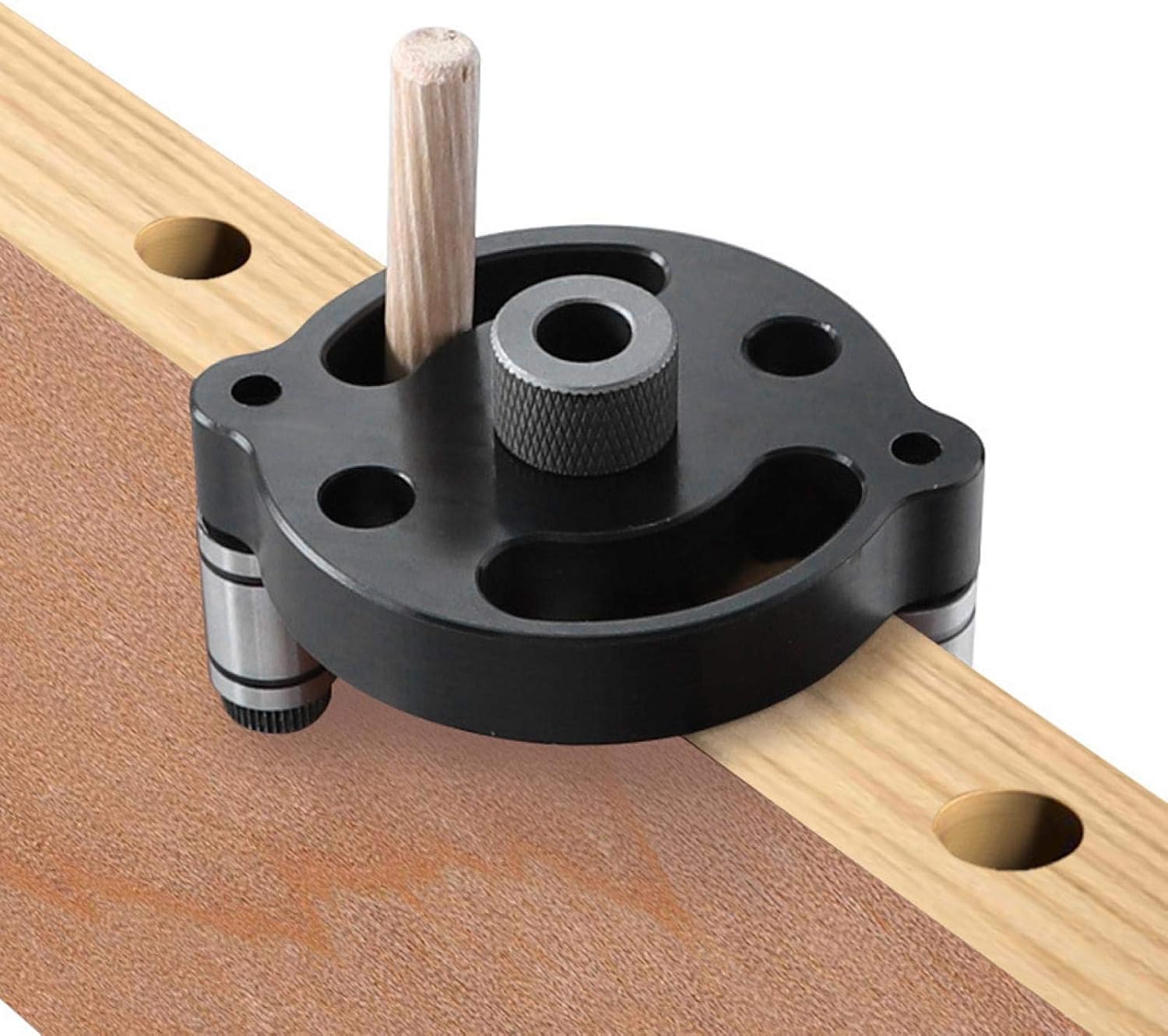
Straight, regular holes are essential for dowel joints that don’t fight you throughout construction. This aluminum-alloy dowel jig kit is designed as a straight-hole guide, enabling you drill cleaner, more centered dowel holes for edge joints, corner joints, and furniture repairs. The advantage over “freehand drilling” is immediate: the jig stabilizes your bit, decreases drift, and increases repeatability—especially when you’re matching holes across two pieces. This results in glue-ups that close neatly without forcing, tighter alignment, and less sanding to correct misfits. It’s a confidence-boosting tool for novices and a time-saver that maintains sharp joinery for seasoned builders.
20. Radius Jig Router Templates Corner Radius Set

A project can appear “finished” with rounded corners, but creating flawless arcs by hand is laborious and variable. With several radius options (R5 through R40), this radius jig router template set is designed to make corner rounding quick and consistent, allowing you to tailor the appearance to the scale of your build. The templates are designed to sit on the workpiece corner so your router follows a controlled path, generating smoother, more consistent curves. It’s particularly helpful for cutting boards, shelves, cabinet parts, and shop jigs—anywhere you want clean corners without having to guess. The outcome is improved symmetry, fewer do-overs, and a more professional edge profile.
21. Giftprod Radius Jig Router Templates

These radius jig router templates are designed for fast, repeatable routing if you enjoy the notion of perfectly rounded corners but don’t want a complex setup. The listing stresses tiny template sizing (about 80mm by 80mm) and a robust ABS-style construction ideal for woodworking use. Simply placing the template and guiding the router will result in uniform corner radii that appear purposeful rather than impromptu. These kinds of templates let you unify your curves for cabinet doors, small boxes, shelves, and furniture edges throughout a project. That consistency enhances both look and safety, because you’re routing with a controlled guide instead of “eyeballing” the cut.
22. Premium Radius Jig Router Templates

Plastic templates work—until you’re routing a bunch and want something that feels more “shop-grade.” This high-end router template set is made of aluminum alloy and has an anodized surface treatment for long-term precision and durability. The idea is the same: guide your router for accurate corners and smooth, repeatable shapes, without drawing lines and sanding forever. Additionally, aluminum templates have a tendency to sit more firmly against the work, which is advantageous when attempting to maintain consistency in every corner across several portions. A harder template set like this is a wise investment for speed, uniformity, and a better completed look if you’re building drawers, shelves, or tiny furniture items in bulk.
23. Pocket Hole Screws 1-1/4″

The quality of a pocket-hole junction depends on the screw holding it in place. The 1-1/4 “pocket hole screws are designed to work with pocket-hole jigs and create a strong, long-lasting joint—especially for common 3/4” material. In addition to a zinc coating for protection and a self-tapping technique designed to bite cleanly and drive smoothly, the description highlights a #2 square-drive head to lessen driver cam-out. For face frames, cabinet builds, shop furniture, and rapid repairs, having the appropriate screw makes assembly faster and outcomes more uniform. It’s not ostentatious.
24. Bobibbi Pocket Hole Screws #8 x 1″

Coarse-thread screws can be the difference between a stripped-out joint and a tight pull when making pocket holes in softer woods. The Bobibbi #8 x 1″ pocket hole screws are packaged as a practical kit: 100 screws with a washer-style head and a square-drive format, with a long SQ2 drive bit supplied. This implies that you won’t have to search for the ideal part in the middle of the project and may start building right away. When you need strong clamping action without splitting, these are perfect for shop constructions, cabinet supports, and rapid furniture frames. If you’re generating several assemblies, a consistent screw-and-bit set maintains your workflow easy and your joints reliable.
25. Tanstic Pocket Hole Plugs Kit

Although pocket holes are sturdy, there are situations when you don’t want them to be seen, particularly on shelves, cupboards, or the sides of furniture. With a wide selection of plastic plugs in various colors, this Tanstic pocket hole plug kit is intended to address that finishing issue. With 160 pieces in 8 hues mentioned in the description, you can mix and match different wood tones or painted finishes. Pop the plugs into your pocket holes, trim if needed, and your project instantly appears cleaner and more deliberate. It’s a straightforward update, but it’s one of those finishing touches that gives do-it-yourself projects a more “store-bought” appearance without requiring costly hardware or additional joinery procedures.
26. Silky GomBoy Professional Folding Saw 240mm

Only when a folding saw tracks straight, cuts quickly, and is easy to hold can it be considered “EDC useful.” With precision-ground, impulse-hardened teeth and a high-end handle for control, the Silky GomBoy Professional 240mm is based on sophisticated Japanese cutting technology. The listing sets forth a 9.5-inch blade length, 1.5mm thickness, and an 8.5 TPI tooth configuration—great for clean, aggressive cutting in wood. Additionally, it has a transparent carrying bag for transportation and latches firmly for secure sawing. This saw is known for its quickness, smoothness, and dependability when it comes to pruning, jobsite trimming, camping, and workshop cuts.
27. REXBETI Folding Saw

The REXBETI 14-inch foldable saw is designed for serious cutting if you’re looking for something that doesn’t feel like a toy. The item features a hardened SK-5 steel blade with four cutting angles and aggressive staggered teeth (5.5 TPI) that are intended to cut through heavy branches more quickly and smoothly. It has a long rubber-coated handle for grip in inclement weather and folds down for portability yet expands up to a full-size feel. This is the kind of saw that shines for camping, yard cleanup, bushcraft, and storm debris—when you need reach and speed without dragging a chainsaw.
28. LAGOM Folding Camp Saw
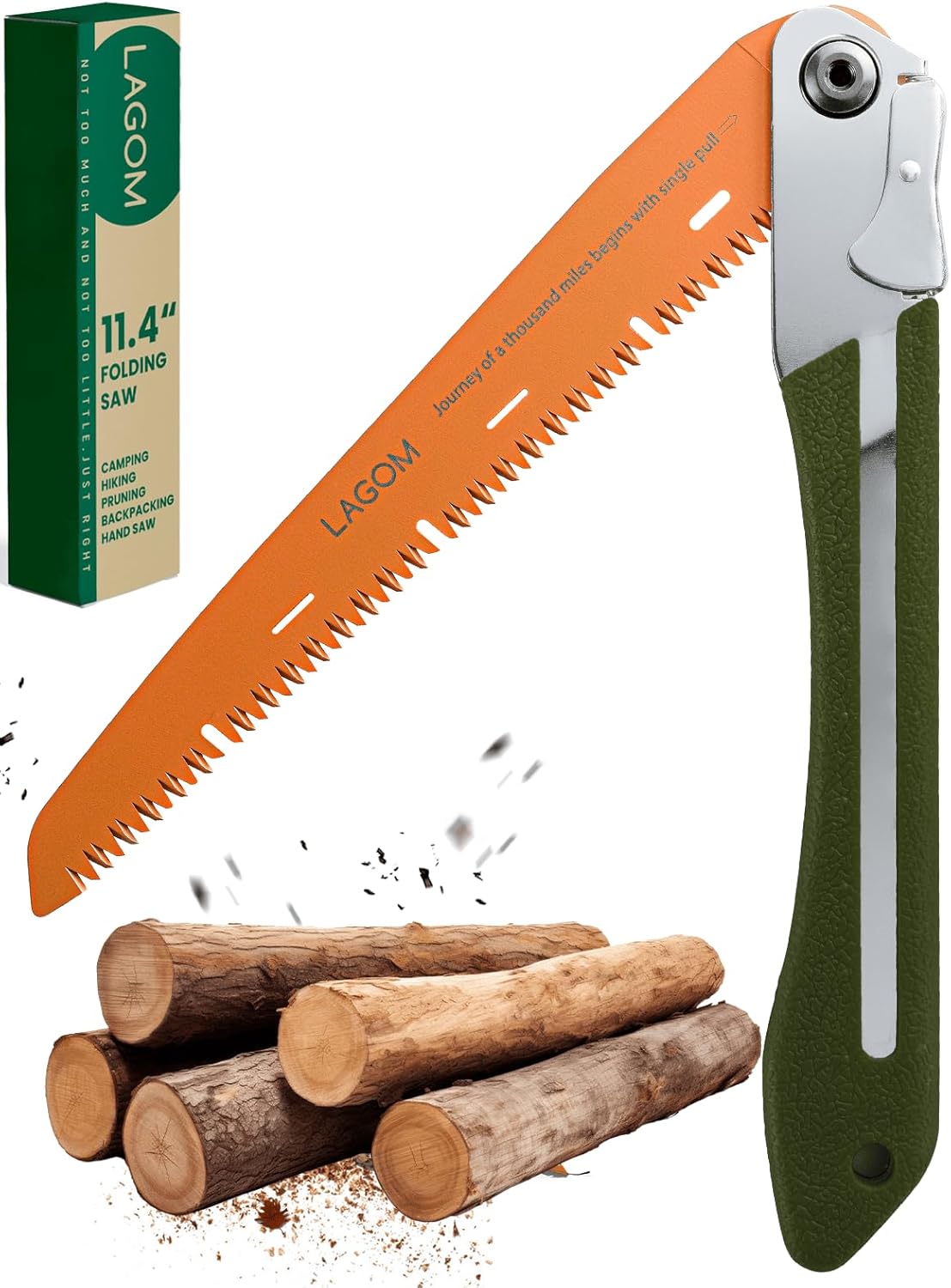
For camp labor, pruning, or rapid wood processing, the ideal folding saw is the one you trust to stay locked and cut cleanly. The high-carbon SK5 steel blade and safety-focused 3-gear lock design of the LAGOM folding camp saw are designed to keep you steady as you work. Additionally, a non-stick coating, chip-clearing design, and one-hand use are mentioned in the listing—features that lessen drag and improve the feel of each stroke. It is sturdy enough for dense branches and brush, yet small enough for a pack or glove box. This is a good choice for actual outdoor chores if you’re looking for a portable saw that feels reliable and controlled.
29. Outdoor Portable Hand Saw

Not only does a competent hand saw cut, but it does so swiftly, cleanly, and with minimal effort. Built around triple-bevel staggered teeth for smoother, sharper cutting, this outdoor portable hand saw is said to operate faster than conventional hand saws. For short domestic cutting jobs, yard trimming, and campground preparation, that tooth shape allows the blade to bite strongly while still tracking more predictably through wood. It’s a convenient tool to keep in the garage, car, or outdoor kit—especially when you need reliable cutting power without batteries. It’s an easy improvement that works well for a reasonably priced utility.
30. 6-Inch Cordless Pole Saw

The instant you’re using a hand saw while balancing on a ladder, tree pruning becomes dangerous. This 6-inch cordless pole saw is designed to bring the cut to you, marrying a tiny electric chainsaw head with an extended pole for high branches. The description features a 21V system with two 3.0Ah batteries, a reported chain speed of 35 ft/s, and a peak reach approximately 13.4 feet—so you can work longer and reach higher without repeated repositioning. It also boasts a multi-angle design for enhanced cutting alignment. For yard maintenance, storm cleanup, and seasonal trimming, this tool adds real convenience and safety, while keeping cuts faster and more controlled.
Things to Consider Before Buying a Woodpecker Tools
There’s a handful of factors you should weigh before buying a Woodpecker Tools product: build quality and materials, measurement accuracy, tool compatibility with your workflow, service support, and whether the tool’s precision fits the scale of your projects. Assess ergonomics, calibration features, and long-term value versus price to ensure your purchase improves efficiency and produces consistent, professional results.
Measuring Tools
You rely on digital calipers (0.01 mm resolution) for tight tolerances and a 300 mm combination square for layout; dial indicators and depth gauges help when you need repeatable setups for jigs and fixtures, and a quality tape (metric/imperial) covers rough dimensions up to 5 m.
Joinery Tools
You use dovetail jigs, tenon saws (typically 14-18 TPI) and router guides to produce interlocking joints; templates and adjustable fences let you dial in 7-14° dovetail angles and consistent widths, so repeatability improves across batches.
You will want sharp mortise chisels (bevel-edge or paring, 20-25 mm widths) and router bits matched to your jig profile; routers at 18,000-24,000 RPM and hardened steel guides reduce tear-out, while investing in a good template guide cuts setup time and ensures uniform joints.
Layout Tools
You mark reference faces with a 3 mm carpenter pencil, use marking gauges for consistent shoulder lines and a 300 mm square for 90° checks; laser cross-lines (±1/8″ at 30 ft) speed alignment on larger panels and reduce rework during assembly.
Thou combine scribing with a sharp knife and a marking gauge, use a 2-3 mm pencil for visible lines, and establish a single reference face so every cut stacks consistently; you can reduce cumulative error to under 0.5 mm across multiple parts by holding to that single reference.
Material Quality
You want alloys and composites that retain hardness and resist fatigue: ask about tool steel grades (D2, S7), carbide types (WC‑Co) and stated hardness (HRC 56-62). Inspect for forgings or full‑tang construction rather than bonded parts, and request metallurgical or hardness test reports to confirm heat treatment and corrosion resistance for humid or salty environments.
Tool Precision
You need repeatable tolerances for repeatable results; target specs like ±0.01-0.02 mm, concentricity <0.01 mm, or runout under 0.02 mm for rotating tools. Verify that moving interfaces use quality bearings and that manufacturers list CNC machining tolerances or laser calibration methods; bring a micrometer or gauge block to confirm critical dimensions yourself.
You should request calibration certificates traceable to national standards (NIST, UKAS) and ISO/IEC 17025 reports to assess measurement uncertainty (for example ±0.01 mm at 95% confidence). Also ask how parts are produced-multi‑axis CNC with in‑process probing and statistical process control usually delivers better repeatability than manual assembly.
Assessing Your Needs
Start by listing projects and frequency: if you install trim weekly, a compact 12-18V model with 2-3 Ah batteries suits you; if you frame or mill lumber monthly, opt for corded or 36V cordless options with higher torque and a 1,200-1,800 W equivalent, so your tool matches load demands and avoids premature wear.
Benefits of Using Woodpecker Tools
You’ll reduce scrap and rework by using tools built for repeatability-users report tighter joinery and faster setups, for example cutting dovetails and tenons with consistent fits after switching to precision squares and shooting boards; durability and calibrated marks mean fewer tweaks and more predictable results across projects.
Maintenance and Care for Woodpecker Tools
Regular Cleaning
You should wipe metal surfaces and guides after each use with a lint-free cloth and a light machine oil, and blast dust from scales and tight spots with compressed air. For resin or glue buildup use isopropyl alcohol or a 50/50 water-vinegar mix; avoid soaking wooden handles. Perform a deeper service every 3 months: disassemble collars and inspect bearings, since untreated bearings can fail after roughly 500-1,000 operating hours.
Proper Storage
You should store tools in a dry space at 40-60% relative humidity and 10-30°C to prevent rust and wood movement. Hang jigs and gauges on a labeled pegboard or shadow board, keep handheld tools in original cases or foam-lined drawers, and place silica gel packs in cases. Avoid stacking heavy items-store long bar clamps on horizontal racks to prevent bending and misalignment.
You can use a lockable, climate-controlled cabinet for precision measuring tools so your calipers and squares remain stable; keep them in foam trays and apply a thin coat of light oil every 6 months. Replace silica packs every 6-12 months and rotate stored stock annually to catch developing issues early. For long-term storage, a thin film of microcrystalline wax on exposed steel gives months of protection without affecting accuracy.
Repairing Damages
When a tool shows wear you should assess whether to repair or replace: replace worn clamp faces, stripped threads, or chipped fences with OEM parts to preserve accuracy. For minor dents, use fine emery and a flattening guide; for split wooden handles, bond a replacement with epoxy and clamp for 24 hours before returning to service.
You should document damage with photos and serial numbers before ordering parts and contact Woodpecker Tools support or an authorized dealer for correct part numbers. Press-fit bearings using a 4-8 mm arbor press or have a machine shop install them to avoid misalignment.
Summing up
Hence you should weigh durability, bit compatibility, ergonomics, and price against the specific tasks you intend to perform; test balance and vibration where possible, and prioritize safety features and service availability so your Woodpecker tools deliver consistent, long-term value.
Leave a Reply